Photography Rules
Don't photograph people without permission or government/military buildings. No drones without a GCAA permit.
What you can shoot freely
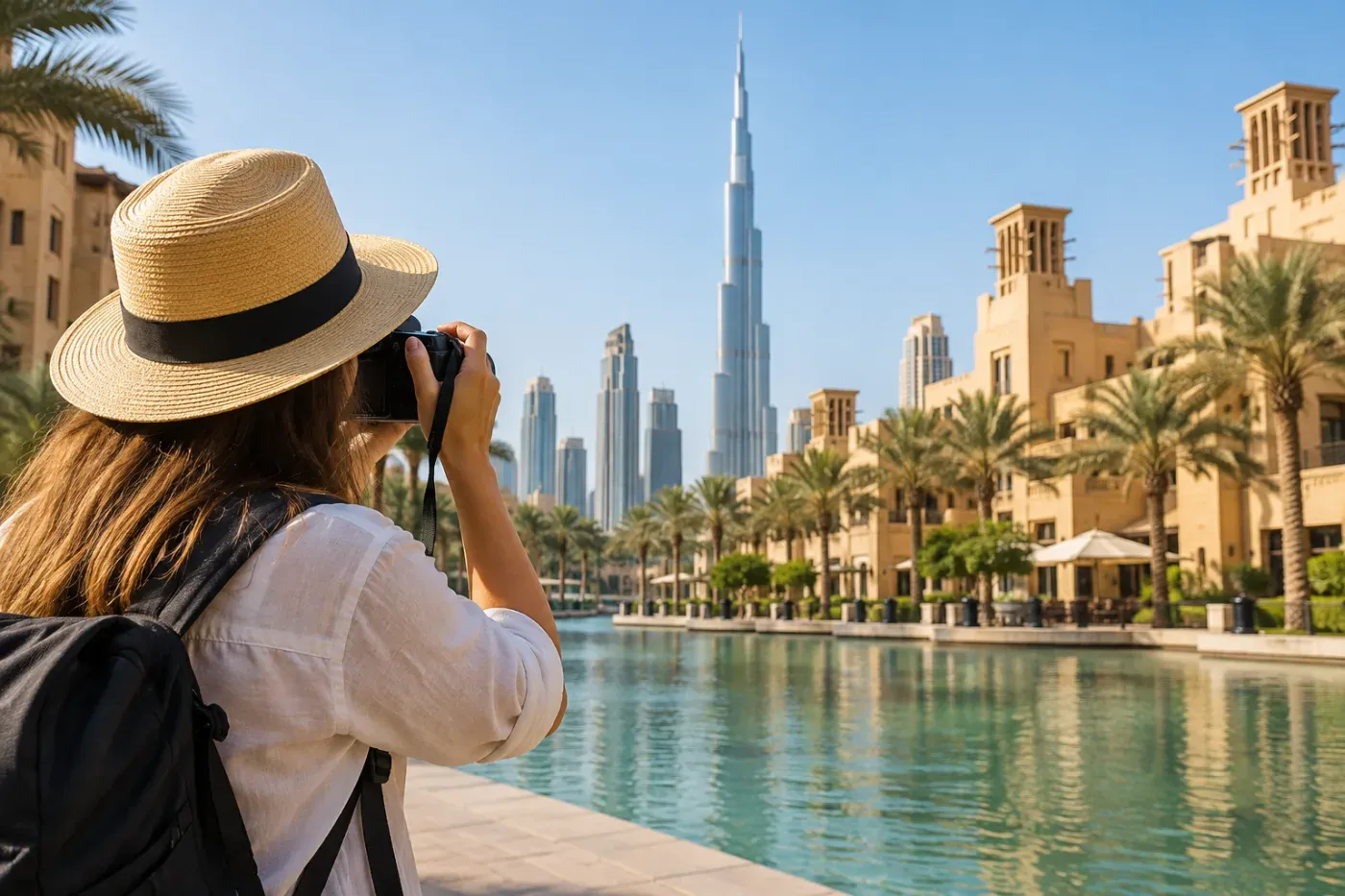
Skylines, malls, beaches, souks, desert landscapes, hotel architecture and your own group: all fine, all day. The UAE is one of the most photographed countries on earth and tourist photography is welcomed — observation decks, photo-stop tours and golden-hour viewpoints exist precisely because of it. Night photography of illuminated landmarks (Burj Khalifa, Sheikh Zayed Grand Mosque exterior, Marina towers) is unrestricted from public areas and delivers the portfolio shots.
Inside mosques open to visitors, photography is allowed in designated areas during visiting hours — follow the guide markers, silence the shutter sound, and pause entirely during prayer times. Museums and attractions post their own camera policies at entrances; phone photography is near-universally fine, tripods and commercial rigs sometimes need permits.
The three hard lines
People: photographing strangers — especially women, children and families — without clear consent can trigger confrontations and, in persistent cases, legal complaints. Always ask, accept no gracefully, and never photograph anyone in distress or in uniform. Government, military, police, palace and critical-infrastructure sites (ports, airports beyond the terminal selfie, embassies): prohibited, with signage and occasionally immediate equipment checks. Drones: personal flying requires GCAA registration plus airspace approvals that weave through no-fly zones covering most of Dubai and Abu Dhabi — tourists effectively cannot fly legally without pre-arranged permits, and confiscation plus fines are the standard outcome.
Accidents and emergencies sit in the same prohibited bucket: filming crash scenes, police activity or medical responses invites serious trouble. When in doubt, the camera stays down.
Golden hours and signature shots
The photography calendar has two daily jackpots: sunrise over the Creek and old town (empty frames, soft light, abra silhouettes) and the blue-hour window after sunset when the Marina and Downtown glow against deep sky. Observation decks reward the sunset slot specifically — book timed entry 60–90 minutes before sundown to catch daylight, golden and night frames in one visit. Desert photography peaks in the same windows, with dune ridges carving shadows no midday sun can match.
For phone photographers, night mode handles the illuminated skyline beautifully from any tripod-still position (brace on railings where tripods draw attention). Clean the lens — desert dust and sea spray degrade more shots than settings ever do — and shoot mosques in morning light when marble glows and crowds thin.
Shooting checklist
- Landmarks, landscapes and your own group: shoot freely, day and night.
- Ask before photographing people; accept refusal instantly.
- Never shoot government, military, police or palace sites.
- Leave the personal drone home without pre-secured GCAA permits.
- Respect mosque prayer times and posted no-photo zones.
❓ Common questions
Can I photograph the Burj Khalifa?
Yes, from anywhere public, any time. It is the most photographed building in the country for a reason.
What about street photography?
Fine for scenes and architecture; get consent before making strangers your subject, especially families.
Are camera drones really enforced?
Yes — unlicensed flying draws fines and confiscation, and no-fly zones blanket the cities. Book licensed drone tours instead.
Can I use a tripod?
Tourist tripods are tolerated at viewpoints; attractions and malls may ask professionals to permit up. Monopods attract less attention.
What if someone objects to my photo?
Delete it in front of them and apologise. Escalation helps no one and the law favours the subject.
Still have questions about this?
Our Dubai-based team answers on WhatsApp in ~5 minutes, 24/7.