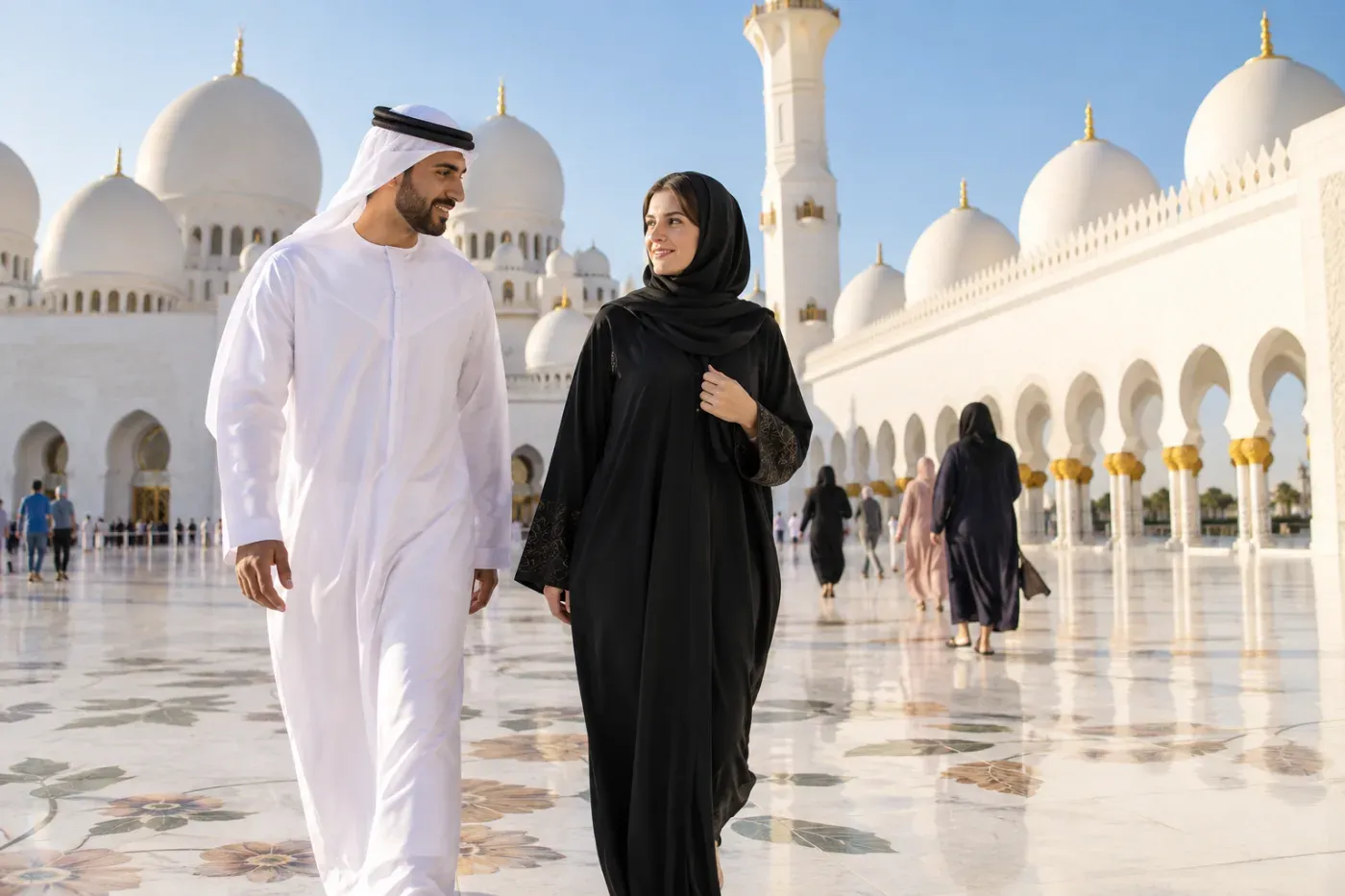
Dress Code Guide
Malls: casual fine, no swimwear. Mosques: women cover hair/shoulders/knees. Beaches: bikini fine at public beaches. Sharjah is more conservative.
The one principle
UAE dress expectations follow a single logic: cover more in traditional and official spaces, relax in leisure spaces. Nobody expects tourists to wear Emirati dress, and ordinary Western holiday clothing — shorts, t-shirts, summer dresses — is completely normal in malls, restaurants, hotels and tourist districts. Problems only arise at the two extremes: swimwear away from water, and uncovered shoulders or knees in mosques and government buildings.
Enforcement is almost entirely social rather than legal in tourist areas: you may get a polite word from mall security or a disapproving look, not a fine. The exception is places of worship and Sharjah, where the rules are explicit and enforced. When in doubt, carry a light scarf or shawl — it solves nearly every situation in seconds.
Mosques and religious sites
Both mosques that welcome non-Muslim visitors — the Sheikh Zayed Grand Mosque in Abu Dhabi and Jumeirah Mosque in Dubai — require modest dress: women cover hair, arms to the wrist and legs to the ankle; men wear long trousers and sleeved shirts. Both sites lend abayas and headscarves free of charge at the entrance, and the Grand Mosque runs a slick distribution system that takes minutes. Swimwear, transparent fabrics and tight clothing are refused entry, and Friday midday visits revolve around prayer — guided tours pause and resume after.
Beaches, pools and hotels
Bikinis and swim shorts are normal at every public beach, hotel pool and waterpark — this is a beach culture, not a restriction zone. The line is topless sunbathing, which is illegal everywhere, and walking through streets, malls or restaurants in wet swimwear, which will get you stopped. Cover up for the walk back: a kaftan, t-shirt or sarong over swimwear is the expected uniform for beach-adjacent promenades like JBR Walk.
Hotel dress codes scale with the venue: pool decks are swimwear, lobby restaurants are smart-casual, and the flagship fine-dining rooms expect collared shirts and closed shoes for men. When a booking confirmation mentions a dress code, it means it.
Quick rules by place
- Malls and restaurants: casual is fine; no swimwear, no bare chests, no transparent clothing.
- Mosques: cover hair, shoulders, arms and legs; free abayas provided at major mosques.
- Public beaches: swimwear fine in the water and on the sand; cover up leaving the beach.
- Sharjah: the most conservative emirate — knees and shoulders covered in public as a matter of respect.
- Desert safaris and wadis: modest activewear; women should avoid swimwear-style tops at camps.
- Gyms and sports: normal sportswear everywhere; mixed gyms are standard.
❓ Common questions
Do women need to cover their hair in public?
No — only inside mosques. Everyday public dress for women is normal Western clothing with shoulders and knees covered as a courtesy, not a law.
Can men wear shorts?
Yes, everywhere tourists go. The only common restriction is swim shorts or sleeveless vests in higher-end restaurants.
What should I pack?
Light breathable layers, one modest outfit (long trousers + shawl/scarf), swimwear, and something smart for a nice dinner. Winter adds one warm layer for desert nights.
Is Sharjah really stricter?
Noticeably, yes — it is a dry emirate with conservative public norms. Dress modestly there and save the beachwear for Dubai.
Still have questions about this?
Our Dubai-based team answers on WhatsApp in ~5 minutes, 24/7.