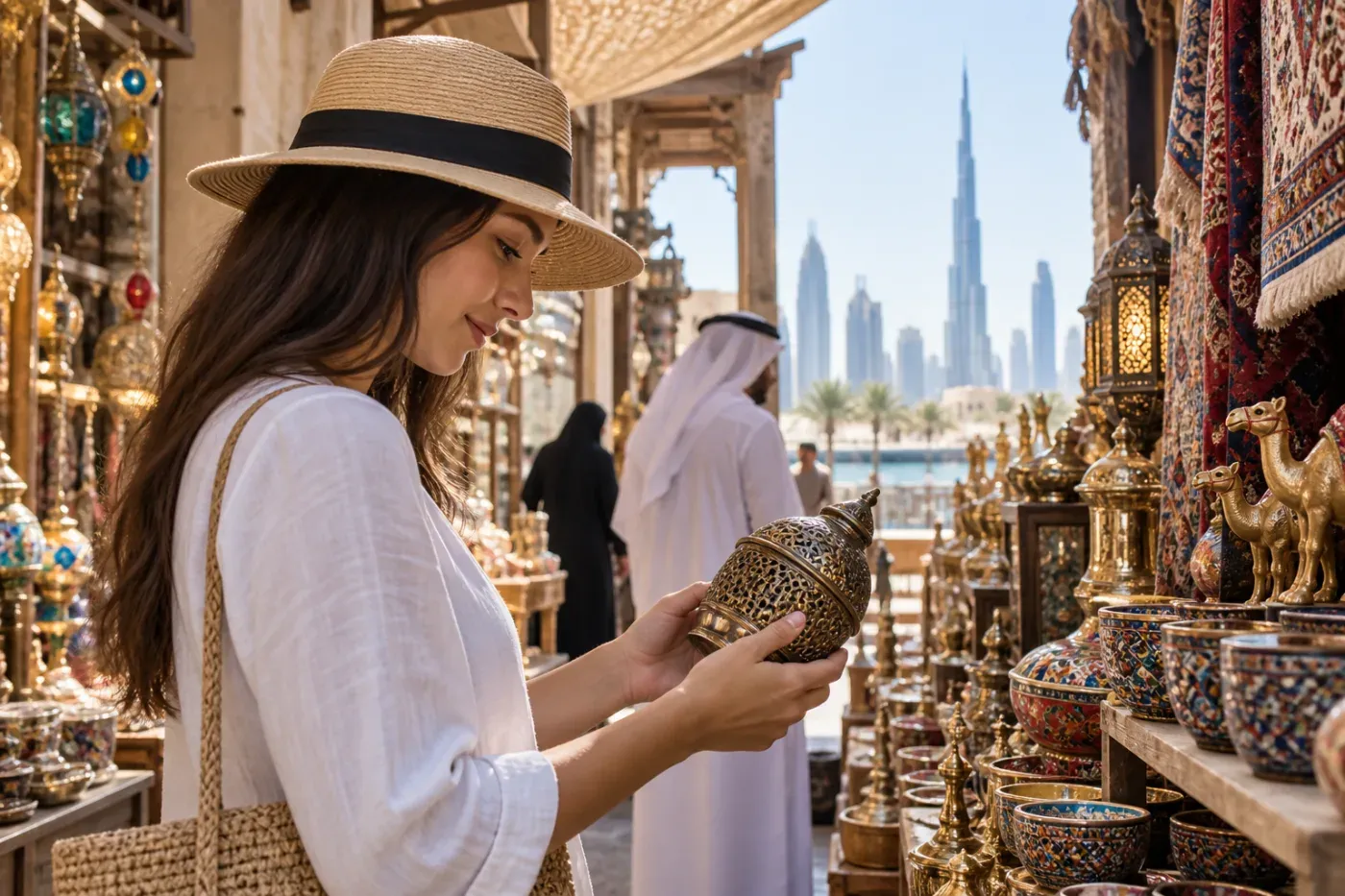
What to Buy in Dubai
Gold (tax-free, check the daily rate), oud & Arabian perfume, saffron & spices, dates (AED 30–300/kg), pashmina, carpets with certificates, camel milk chocolate.
The souvenirs actually worth it
Gold tops every serious list for structural reasons: tax-free pricing, Gulf-low making charges, and the tourist VAT refund compress Dubai gold below most world markets for identical pieces. Buy from Gold Souk regulated shops with itemised weight-plus-making-charge bills after checking the day rate — the system rewards informed buyers and punishes trusting ones. Arabian perfume (oud, attar, bakhoor) ranks second: genuinely local, compact, and unavailable in equivalent quality at home.
Food souvenirs punch above their weight: Medjool and Khalas dates (AED 30–300/kg by grade), saffron and spice blends from the Spice Souk, camel-milk chocolate, and Arabic coffee sets with dallah pots. Textiles need sharper eyes — real pashmina versus acrylic, hand-knotted carpets with certificates versus prints; buy carpets only with authenticity papers from established houses, never from street approaches.
What to skip
Electronics rarely beat home prices once warranties localise — a cheaper phone with a void international warranty is no deal. Designer fashion matches global pricing minus the refund edge; buy for selection (flagship ranges land here first) rather than savings. Kitschy souvenirs (mini Burjs, snow globes) cost triple in hotel gift shops versus Deira and Dragon Mart for identical stock. And anything involving wildlife products, unlicensed antiquities or suspiciously cheap luxury is either illegal, fake or both — customs at both ends takes interest.
The meta-rule: buy what is structurally cheaper here (gold, oud, dates, spices) or culturally specific (coffee sets, henna kits, camel-milk goods), and photograph the rest. Your luggage allowance will thank you.
Dates, spices and food gifts
Edible souvenirs travel best and please universally. Dates grade from everyday Khalas to gift-boxed Medjool stuffed with candied orange peel and nuts — taste across three shops before committing to kilos, and vacuum-sealed boxes survive luggage easily. Spice Souk saffron (check grades and weights carefully), zaatar blends, dried limes and Omani frankincense fill small bags with big aromas.
Camel-milk chocolate (Al Nassma and café brands) surprises sceptics into converts, while Arabic coffee (qahwa) with cardamom plus a dallah pot sets gift-givers apart from mug-buyers. Spice grinders, bakhoor burners and henna cones round out kits that recipients actually use rather than shelve.
Souvenir checklist
- Gold: check day rate, demand itemised weight plus making-charge, compare two shops.
- Oud and attar from reputable perfumeries; dates and spices from busy souk stalls.
- Carpets only with authenticity certificates from established houses.
- Skip electronics for price; buy for early-release selection instead.
- Claim VAT refunds on big tickets (see Tax & Refund guide).
❓ Common questions
Is gold really cheaper?
Yes — tax-free plus low making-charges plus tourist refund beats most markets for like-for-like pieces.
How much are dates?
Supermarket Medjools from AED 30/kg; premium gift-boxed varieties to AED 300/kg. Taste before committing.
Where do I buy oud?
Dedicated perfumeries (Ajmal, Rasasi, Swiss Arabian) and souk specialists — avoid street touts entirely.
Can I bargain in malls?
No — fixed prices rule malls. Souks, Dragon Mart and street stalls expect it.
What is banned from export?
Wildlife products, unlicensed antiquities, large cash sums undeclared — plus destination-country rules on food and gold values.
Still have questions about this?
Our Dubai-based team answers on WhatsApp in ~5 minutes, 24/7.