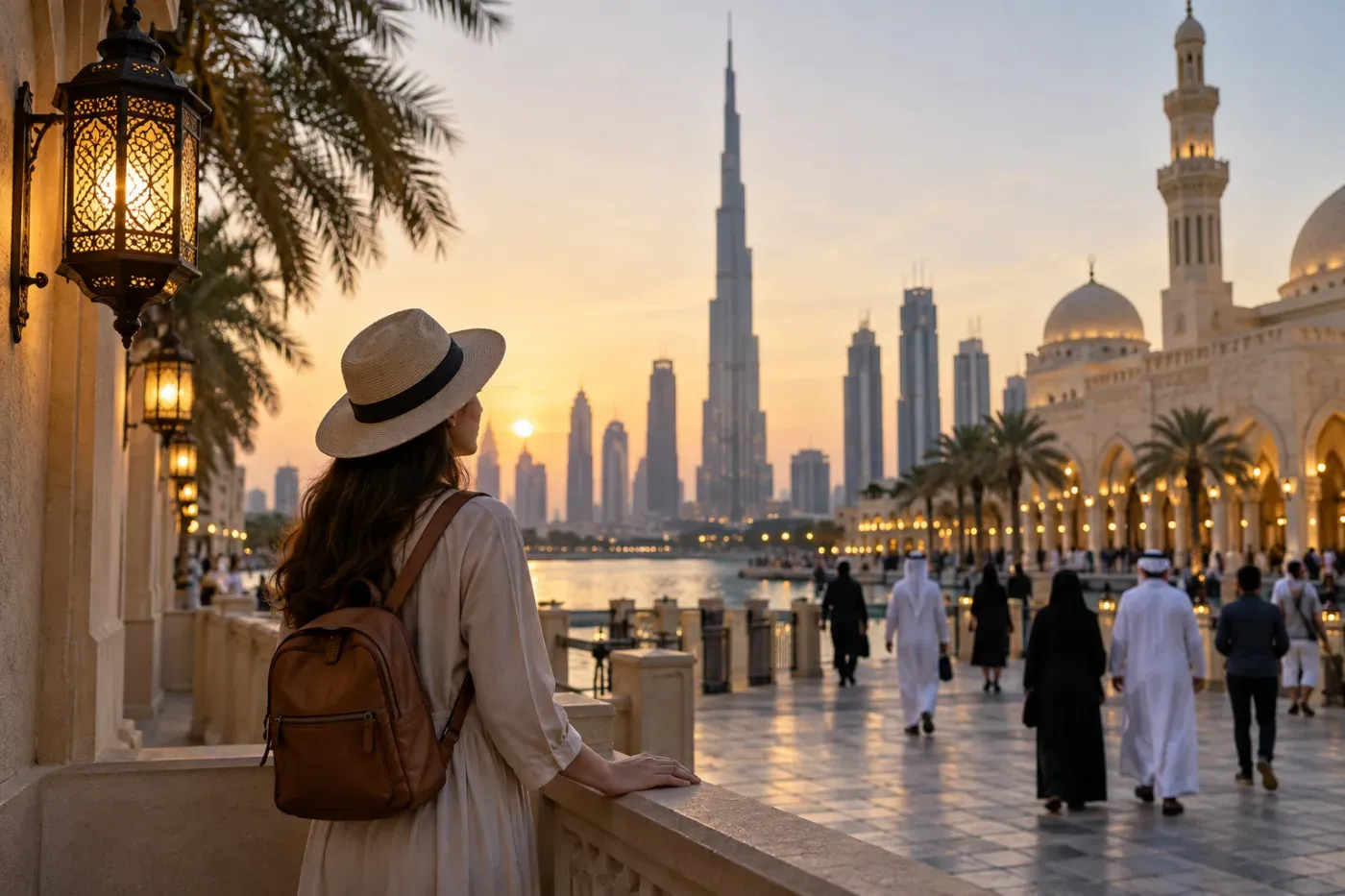
Ramadan Visit 5 Days
What's different, iftar experiences, cultural immersion and adjusted timings.
About this plan
What's different, iftar experiences, cultural immersion and adjusted timings.
Follow it as-is, or use it as a starting point — tell us your dates on WhatsApp and we'll turn it into an hour-by-hour route with transport, tickets and pickup times.
Why this plan works
Ramadan rewrites the trip clock in the best way: slow respectful days, spectacular nights, lavish iftar tents welcoming tourists, and prices softer than peak season. Five days paces sightseeing in calm mornings, rests through afternoons, and feasts plus old-town walks after dark — the month rhythm adopted fully rather than fought. Visitors who lean in consistently call it their most memorable UAE trip.
The cultural immersion is unmatched: mosque-community iftars, charity distributions, night markets, taraweeh atmosphere around major mosques, and conversations locals initiate more readily than any other month. No other season offers this depth of access to lived Emirati culture.
Suhoor and late nights
Suhoor — the pre-dawn meal — anchors Ramadan night culture: hotel tents serve serene sittings through the small hours, Corniche walks fill post-midnight, and the city hums on an inverted clock visitors can join freely. Night owls thrive; early birds adjust alarm strategies around shortened sleep.
Taraweeh prayers extend mosque evenings beautifully; respectful observation from designated areas (no photography, quiet movement) offers spiritual tourism at its most genuine. Ask guides about mosque-visit etiquette specifics for the season.
Trip highlights
- Day 1: old town mornings, Al Fahidi iftar-evening orientation.
- Day 2: Downtown icons by day, flagship hotel iftar tent night.
- Day 3: Louvre/Abu Dhabi or Sharjah heritage day with evening return.
- Day 4: beach morning, mall afternoon, community iftar evening.
- Day 5: souk revisits, suhoor experience night before, farewell brunch.
- Night markets, taraweeh-area walks and charity-drive participation.
Budget and logistics
Budget AED 2,000–3,500 per person excluding hotels (Ramadan hotel rates dip below peak): iftar tents (AED 150–400 per head at flagships, free-to-cheap at community ones), standard attraction tickets, metro-plus-taxi transport, mid-range meals with iftar splurges. Hotels offer Ramadan staycation packages worth comparing against standard rates.
Daytime dining runs screened (hotels, select mall venues) — plan lunches there without guilt. Attractions run shorter hours; confirm daily. Dress a notch more modestly, keep public energy muted by day, and book famous iftar tents days ahead — they sell out to residents first.
Etiquette that earns warmth
The month asks three things: no public eating, drinking or smoking in fasting hours; muted daytime conduct (music, beach exuberance, dress); and openness after dark (accept invitations, try everything, linger). None confines tourists — screened venues serve normally — all of it signals the respect that unlocks extraordinary hospitality in return.
Photography pauses around prayers and religious gatherings; charity photography (distributions, queues) stays firmly off-limits. Give to community fridges and drives when passing — participation, not observation, is the month spirit.
❓ Common questions
Can tourists join iftar?
Warmly yes — hotel tents (booked) and community iftars (often free) both welcome respectful non-Muslims.
Is alcohol available?
Licensed venues generally continue with discretion; daytime public consumption stays off-limits.
Are attractions open?
Mostly yes with shorter hours. Theme parks, malls, museums operate — confirm specific timings.
What is suhoor?
The pre-dawn meal before fasting resumes; hotels serve it as a serene late-night sitting worth trying once.
Is Ramadan cheaper?
Hotels and some experiences dip below peak; iftar dining splurges balance it. Net: moderate savings plus unmatched atmosphere.
Want this trip booked for you?
Transport, tickets and hotel pickup — one message, everything arranged at real market prices.