Desert Immersion 3 Days
Lahbab + Mleiha + Liwa: overnight camping, stargazing, camel trekking and falconry.
About this plan
Lahbab + Mleiha + Liwa: overnight camping, stargazing, camel trekking and falconry.
Follow it as-is, or use it as a starting point — tell us your dates on WhatsApp and we'll turn it into an hour-by-hour route with transport, tickets and pickup times.
Why this plan works
Three days traces a desert gradient most visitors never perceive: Lahbab red dunes (classic safari country, deepening), Mleiha archaeological sands (fossils, tombs, history underfoot), Liwa Empty Quarter edge (the profound dunes, highest and emptiest). Each desert differs in colour, scale and silence — stringing all three converts dunes from backdrop to subject.
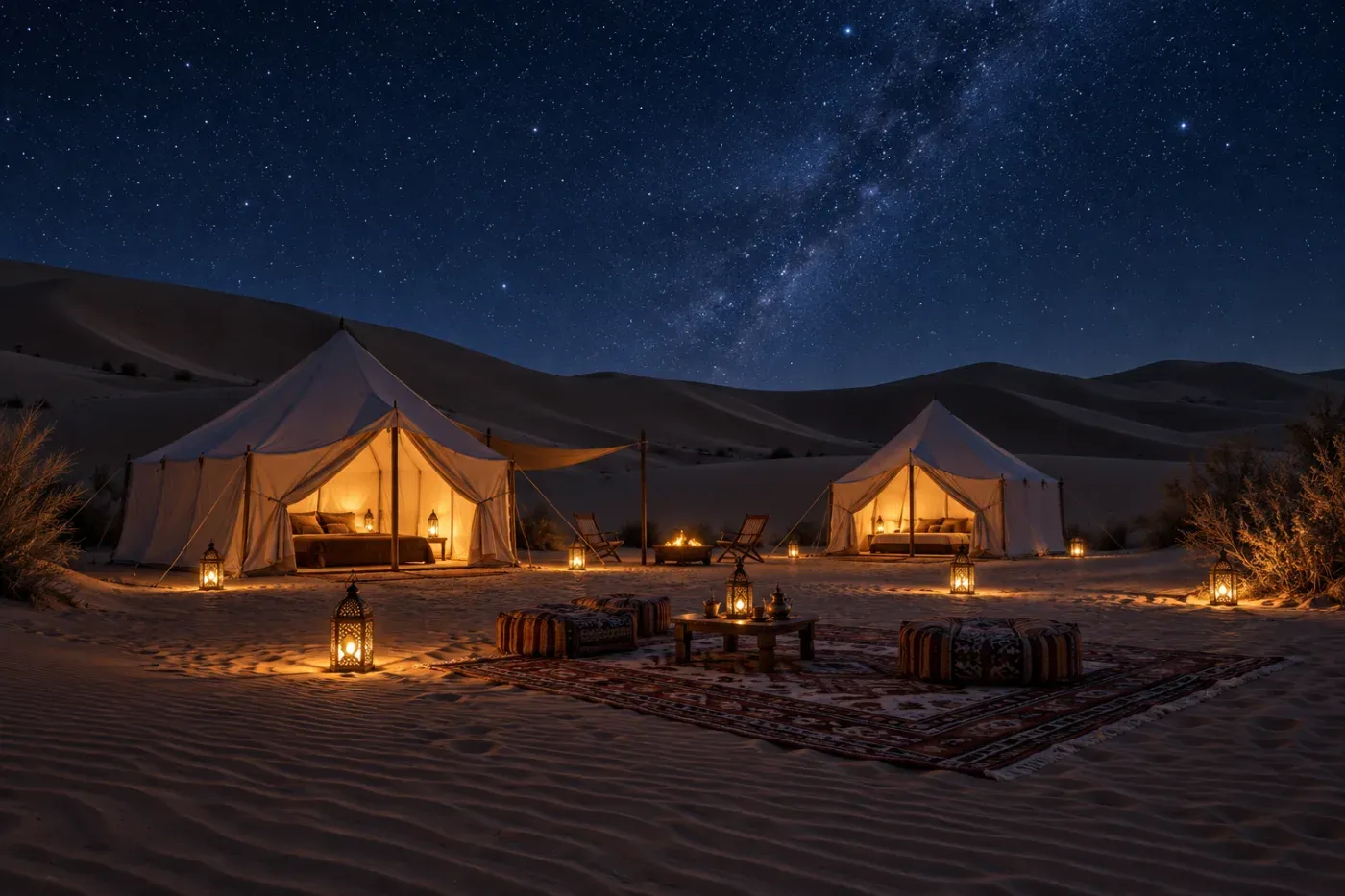
The overnight is the trip heart: camping far from city glow under genuinely world-class stars, with Bedouin hospitality formats (coffee rituals, bread-making, falconry displays, camel encounters) that day-trippers glimpse only briefly. Two nights out, three dune systems, one continuous quiet.
Desert photography basics
Dune photography rewards the same golden hours as the itinerary: ridgelines carving shadows at sunrise and sunset, camel caravans positioned with handler help, camp lanterns glowing against blue-hour sand. Midday desert flattens hopelessly — schedule shoots dawn and dusk, edit and rest between.
Protect gear obsessively: sealed bags against fine sand, lens changes inside vehicles only, tripods for night skies, power banks for cold-drained batteries. Sand destroys equipment casually and permanently.
Trip highlights
- Day 1: Lahbab dunes — buggy or safari, red-sand sunset, first camp night.
- Day 2: Mleiha archaeology morning, fossil sites, afternoon Liwa transfer.
- Day 3: Liwa mega-dunes (Moreeb viewpoint), camel trek, falconry finale.
- Stargazing both nights; winter Milky Way season is superb.
- Camel trek at dawn; falconry display with licensed operators.
- Bedouin bread-making and coffee rituals at camps.
Budget and logistics
Budget AED 2,000–4,000 excluding city hotels: guided Liwa day or overnight (~AED 500–1,200), Mleiha experiences (~AED 150–400), Lahbab safari tier (~AED 250–400), camp nights (standard ~AED 500, luxury 2–3x), rental 4x4 alternative for self-drivers (~AED 400–600/day with fuel). October to April only for serious desert time; summer restricts to operator-run sunrise formats.
Pack winter layers (nights near freezing December–February), headlamps, power banks, and dust-proofing for cameras. File routes daily, carry 5L water per person, download offline maps — signal dies in dunes. Never self-drive dunes solo; convoys or guides only.
Stargazing and silence
Liwa dark skies rank among the most accessible world-class stargazing on earth: winter Milky Way core, meteor showers crisp in dry air, zero light domes beyond camp lanterns (douse them for viewing hours). New-moon dates deliver darkest skies — check lunar calendars when fixing dates. Apps identify constellations live; guides narrate Bedouin star-lore you will not find in books.
Silence itself is the souvenir: no traffic, no hum, just wind on sand. Travellers consistently rank the quiet above the activities — protect it by choosing small-group formats over party camps.
❓ Common questions
Liwa or Lahbab for first desert?
Lahbab for convenient classic safari; Liwa for profound scale and stars. This plan does both in order.
Is winter camping cold?
Genuinely — near freezing some December–February nights. Rated sleeping bags plus layers, non-negotiable.
Camel trekking ethical?
With licensed reputable operators using healthy animals and fair loads, yes. Avoid photo mills with visibly poor animals.
Stargazing best months?
October–March, new-moon weeks. Summer skies haze with heat and dust.
Can beginners handle this?
With guides, absolutely — no skill needed, only fitness for short dune walks and heat protocols.
Want this trip booked for you?
Transport, tickets and hotel pickup — one message, everything arranged at real market prices.