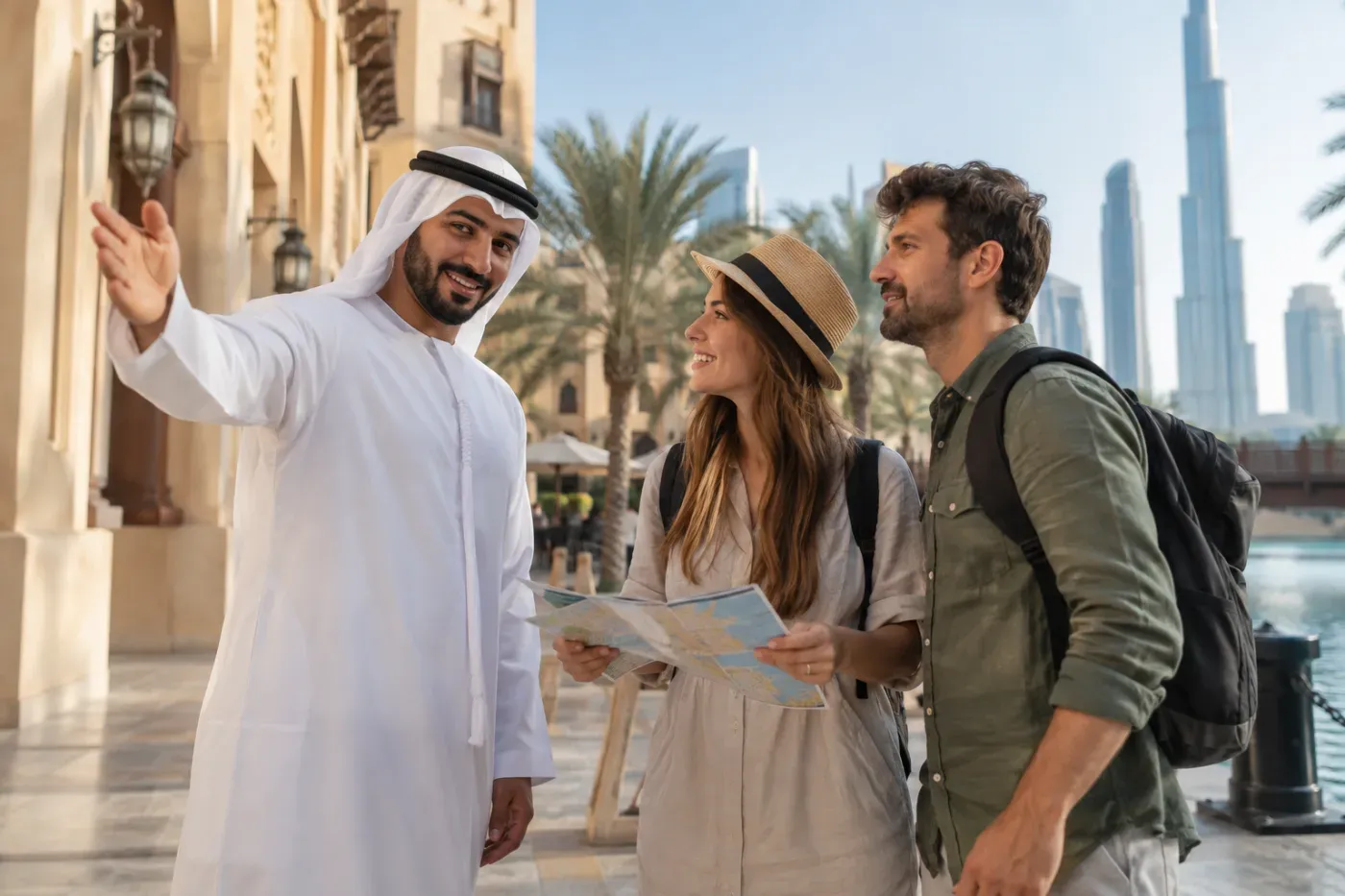
Arabic Phrases for Tourists
20 essentials with pronunciation: Shukran, Inshallah, Yalla, Naam, Habibi, Mafi mushkila and more.
Ten phrases that change trips
As-salamu alaykum (peace be upon you) opens every interaction better than hello — reply Wa alaykum as-salam. Shukran (thank you) and Afwan (you are welcome / excuse me) oil daily life. Naam (yes) and La (no) with a smile handle markets. Yalla (let us go) hurries taxis playfully. Inshallah (God willing) seasons every future plan correctly. Habibi (my dear, to men) and Habibti (to women) warm any friendly exchange — use with people you have actually befriended, not strangers. Mafi mushkila (no problem) dissolves friction. Kam? (how much?) starts every souk negotiation. Shway-shway (slowly, gently) charms drivers, guides and shopkeepers alike.
Pronunciation is forgiving: stress lightly, roll nothing, and confidence beats accuracy. Emiratis and long-term residents visibly light up at any attempt — the bar is trying, not perfecting. Children learn fastest; teach them shukran and yalla on day one and watch the delighted reactions.
Ten more for flavour
Mabrook (congratulations) for celebrations and new purchases. Sahha (to health) when someone sneezes or before shared meals. Tafaddal (please, come in / go ahead) — hospitality in a word, mirrored back constantly. Mumkin (possible?) softens every request. Wayn...? (where is...?) plus a place name navigates old districts. Hisab, min fadlak (the bill, please) closes restaurant meals. Maashallah (God has willed it) admires babies, successes and beauty without envy. Subhanallah expresses awe at deserts, mosques and sunsets. Khalas (finished/done) ends negotiations and activities. Bukra (tomorrow) schedules everything with Gulf flexibility.
Two warnings: religious phrases carry weight — use inshallah and maashallah sincerely, never sarcastically. And keep dialect expectations low: Gulf pronunciation differs from Egyptian or Levantine media Arabic, so your textbook phrases will sound charmingly foreign everywhere.
Numbers, days and directions
A tiny numerical toolkit unlocks prices, floors and times: wahed (one), ithnayn (two), thalatha (three), khamsa (five), ashra (ten), and miya (hundred) cover nearly every haggle. Days run al-ahad (Sunday) through as-sabt (Saturday), with al-jumaa (Friday) the congregational anchor. Yameen (right) and yasaar (left) plus wayn al-hammam (where is the bathroom) complete survival navigation.
Time expressions run on Gulf flexibility: bukra means tomorrow in theory and eventually in practice, dilwaqti means now-ish, and inshallah attached to plans means hope, not commitment. Smile at the elasticity rather than fighting it — schedules here breathe, and visitors who breathe with them enjoy far better days.
Language checklist
- Master the core ten before landing; add the second ten during the week.
- Greet with salaam, thank with shukran, part with maasalaama (go with safety).
- Use religious phrases sincerely, never as jokes.
- Teach kids shukran and yalla first — instant local affection.
- Keep a translation app for menus and signs; people for everything else.
❓ Common questions
Do I need Arabic to visit?
No — English works everywhere in tourism. Arabic phrases earn warmth, not necessity.
Is Gulf Arabic different?
Yes, noticeably from Egyptian/Levantine dialects. Locals understand all variants; visitors need not distinguish.
How do I say thank you properly?
Shukran, with eye contact and a smile. Shukran jazeelan (thank you very much) for real gratitude.
What should I never say?
Avoid profanity in any language in public (actionable), and never misuse religious phrases sarcastically.
Best way to learn more?
Hotel staff and guides teach willingly — ask for one phrase daily and practise it all day.
Still have questions about this?
Our Dubai-based team answers on WhatsApp in ~5 minutes, 24/7.