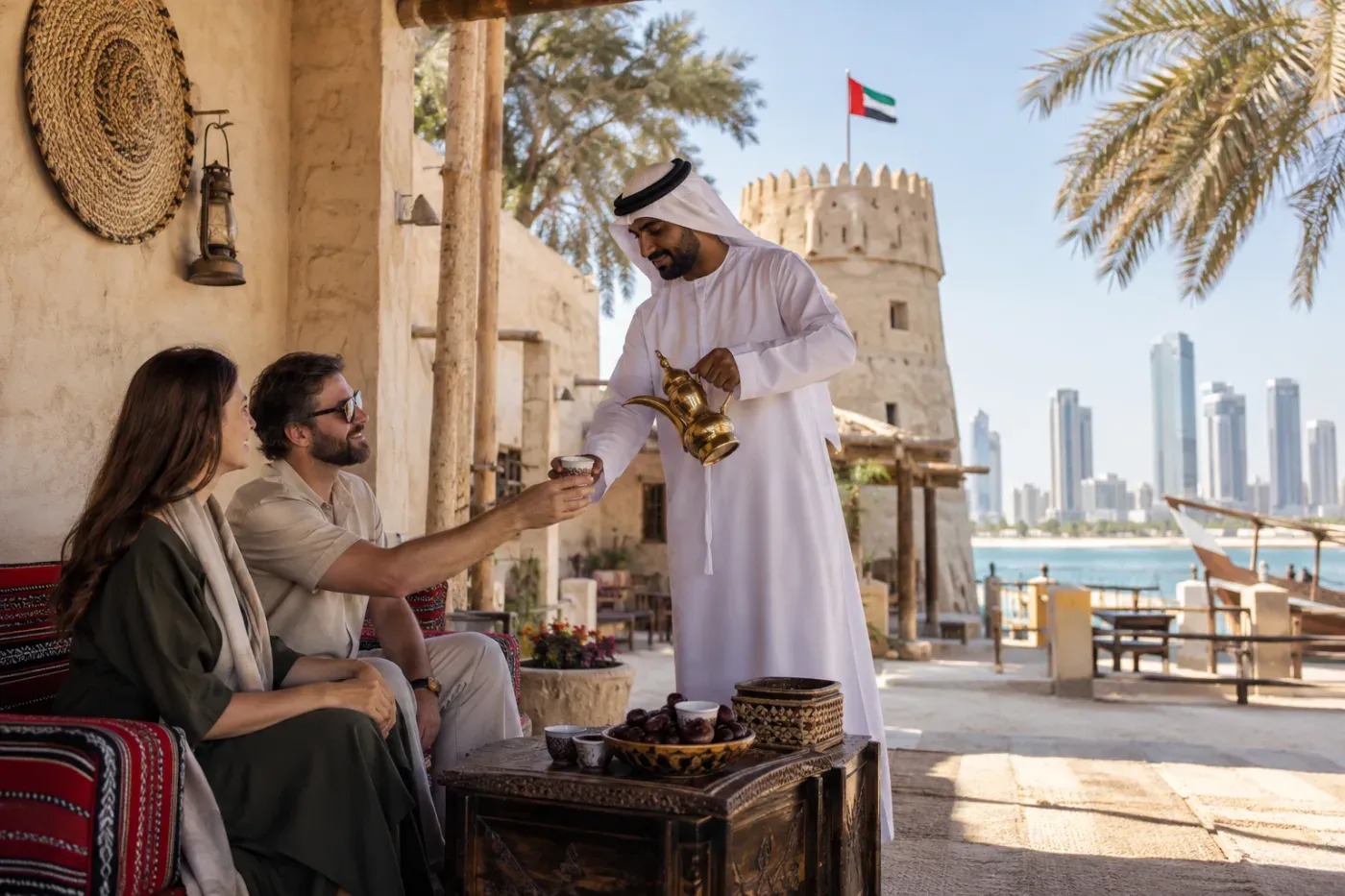
Emirati Traditions
Coffee & dates welcome, falconry, pearl diving history, henna, oud perfume and camel racing.
The welcome rituals
Emirati hospitality runs on two symbols: gahwa (lightly spiced Arabic coffee poured from a dallah pot) and dates, offered to every guest before any business begins. Accept with the right hand, take at least one date, sip the small cup, and wiggle it side-to-side when finished — the signal for no refill. Refusing outright reads as rejection; everything else is flexible. Majlis seating (floor cushions, shared platters, shoes off) extends the same logic to gatherings: settle in, eat communally, linger.
These rituals survive intact in heritage houses, desert camps and cultural meals across the country. The Sheikh Mohammed Centre for Cultural Understanding in Dubai runs the definitive visitor version — open-dialogue breakfasts and lunches where no question is off-limits — while Abu Dhabi cultural foundation programmes and heritage festivals offer deeper seasonal dives.
Falcons, pearls, camels and scent
Falconry remains the national passion with legal force: registered birds with passports, dedicated hospitals (the Abu Dhabi Falcon Hospital tours brilliantly), and winter hunting seasons in permitted grounds. Pearl diving built pre-oil Dubai — museum exhibits and the occasional harvest festival keep the dhow-and-diver heritage visible. Camel racing modernised into robot-jockey sport at Al Marmoom and Al Wathba tracks, free to watch and wonderfully surreal at dawn training.
Scent culture runs parallel: oud (agarwood), bakhoor home incense and Arabian attars are daily life, not souvenirs — though they make superb ones. Henna adorns hands for Eid and weddings at mall pop-ups and heritage events. Each tradition opens to respectful tourists through tours, festivals and the heritage districts; observe first, ask second, participate when invited.
Pearl diving and seafaring roots
Before oil, the Gulf economy floated on pearls: dhow fleets sailing months-long diving seasons, divers descending on ropes with nose clips and leather finger guards, harvests traded through Dubai Creek to Bombay and beyond. The industry collapsed with cultured pearls in the mid-20th century, but its memory structures heritage identity — dhow harbour museums, the annual pearl-diving commemoration sails, and pearl merchants still working Deira shops.
Seafaring heritage extends to dhow building (Jaddaf yards still launch wooden hulls by hand), fishing traditions, and the maritime skills celebrated at heritage festivals. A Creek dhow cruise at sunset doubles as a history lesson when booked with commentary; the Al Fahidi and Shindagha museums anchor the story ashore.
Traditions checklist
- Accept gahwa and dates with the right hand; wiggle the cup to decline refills.
- Book the SMCCU cultural breakfast for open-dialogue Emirati conversation.
- Tour the Abu Dhabi Falcon Hospital; dawn-watch camel training in season.
- Buy oud and attars from reputable perfumeries, not street touts.
- Try henna at heritage events; respect wedding and religious contexts.
❓ Common questions
Can tourists experience a majlis?
Yes via cultural centres, heritage houses and desert camps with majlis seating — the SMCCU programme is the classic.
Is falconry still practised?
Actively, with registered birds, hospitals and seasons. Tourist experiences range from photos to full displays.
What is oud exactly?
Agarwood resin burned as bakhoor or worn as attar oil — the signature scent of Gulf hospitality. Buy small to test.
Can I watch camel racing?
Yes, free at Al Marmoom (Dubai) and Al Wathba (Abu Dhabi) in season — dawn sessions are magical.
Is henna only for women?
Traditional bridal henna is female-focused, but tourist applications welcome all hands at festivals and heritage events.
Still have questions about this?
Our Dubai-based team answers on WhatsApp in ~5 minutes, 24/7.