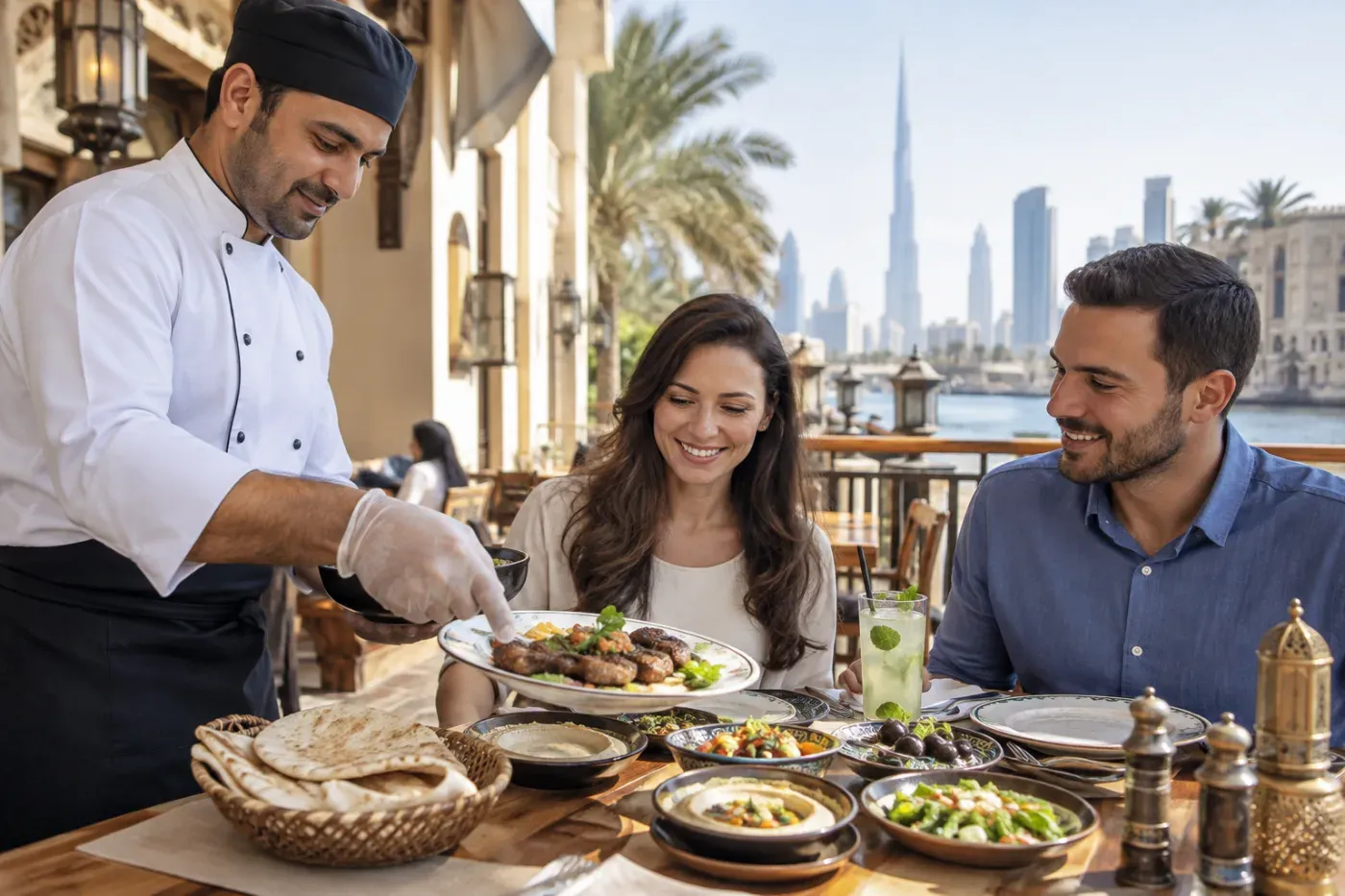
Food Safety
Standards are very high. Street food is safe, ice is safe, restaurants use filtered water.
Eat anything, almost anywhere
The UAE runs one of the tightest food-safety regimes in the region: municipal inspections with public grading, strict cold-chain enforcement, and filtered water as standard in licensed kitchens. The practical result is that visitors can eat across the full spectrum — mall food courts, Pakistani cafeterias, Filipino grill houses, souk sweet shops, food-truck parks — with confidence that would be reckless in many countries. Street food here is regulated food that happens to be served on streets.
The remaining risks are universal, not local: rich buffet spreads sitting in heat, seafood of uncertain provenance from unlicensed sellers, and personal overindulgence at the legendary brunches. Choose busy stalls with high turnover (freshness by velocity), eat seafood where locals queue, and treat all-you-can-eat spreads with strategic restraint rather than maximalist ambition.
Water, ice and sensitive stomachs
Restaurant ice comes from filtered water and is safe; tap water is treated to high standards though most people drink bottled for taste. Fresh juices — avocado, mango, pomegranate from corner cafeterias — use filtered water and washed fruit at reputable shops; pick the busy ones. Salads and raw vegetables in licensed restaurants are washed in safe water as standard practice.
Travellers with delicate stomachs should still ease in: the first 48 hours favour cooked foods and familiar venues while gut flora meets new spice profiles, then expand freely. Pharmacies stock effective remedies for the standard complaints, and clinic visits handle anything persistent within the hour.
Brunches, buffets and Ramadan tables
The heavy-eating formats deserve their own tactics. At brunches, tour the full spread before plating anything, prioritise live stations (grills, shawarma spits, pasta) over steam trays, and treat the dessert room as a separate small meal after a pause. At hotel iftars during Ramadan, the same logic applies across dates, soups, grills and sweets — pace across the evening rather than loading the first plate.
Street-level sweets (luqaimat dumplings, kunafa, camel-milk ice cream) are safe from busy vendors and best eaten fresh within minutes. Carry water into every food walk and market visit; dehydration mimics food illness convincingly, and most supposed food poisonings are heat plus overeating in disguise.
Eating checklist
- Eat anywhere licensed with confidence, from cafeterias to fine dining.
- Choose busy stalls — turnover equals freshness.
- Ice, juices and salads are safe at reputable shops.
- Ease in for 48 hours if your stomach is sensitive.
- Buffet strategy: small first plates, peak-hour venues, hot food hot.
❓ Common questions
Is street food safe?
Yes — licensed stalls face the same inspections as restaurants. Busy ones are the safest of all.
Can I drink the tap water?
It meets high safety standards; nearly everyone prefers bottled or filtered taste. Ice is filtered and safe.
What if I get food poisoning?
Pharmacies cover mild cases; clinics handle persistent symptoms fast. Keep hydrated with electrolytes meanwhile.
Are allergies catered for?
Increasingly well in malls and hotels — state them explicitly, carry translation cards for severe allergies, and keep medication aboard.
Is brunch food safe sitting out?
Reputable brunches manage temperatures professionally. Favour peak-hour seatings when turnover is highest.
Still have questions about this?
Our Dubai-based team answers on WhatsApp in ~5 minutes, 24/7.