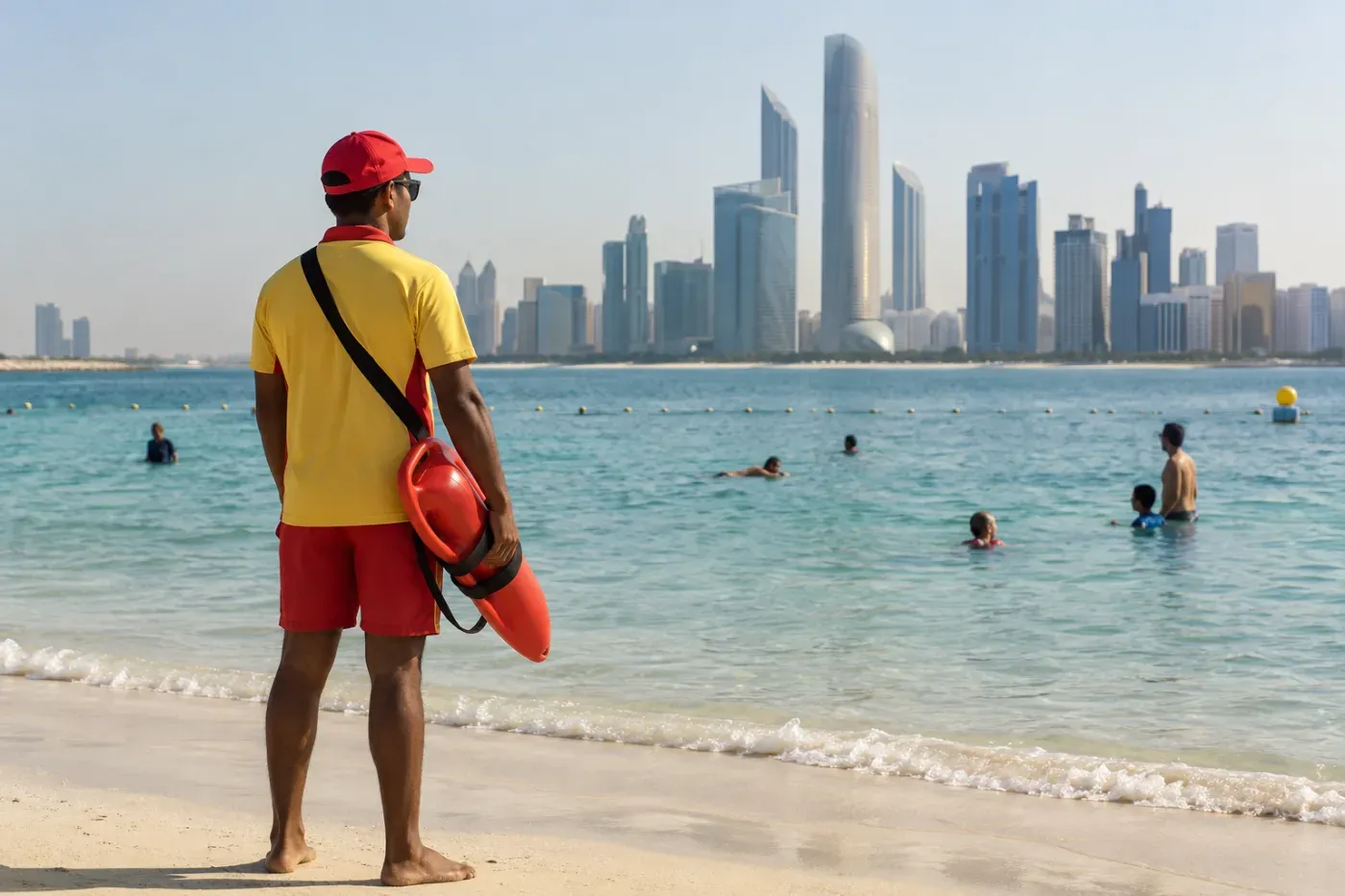
Water Safety
Tap water is safe but most drink bottled. Jellyfish season Nov–Mar, rip currents at some beaches — prefer lifeguarded ones.
Sea, pools and drinking water
The headline facts are reassuring: hotel pools and waterparks run vigilant lifeguarding with strong safety records, municipal beaches fly lifeguard flags over supervised swim zones, and tap water meets high treatment standards (most residents simply prefer bottled taste). The incidents that do occur cluster in predictable places — unguarded stretches, jellyfish season, wadi pools of unknown depth, and open-water trips without reputable operators — all avoidable with ten seconds of assessment.
Swim inside flagged zones, where lifeguards watch currents and conditions continuously. Outside them, you accept the sea as found: rip currents form on some open beaches after wind shifts, and wadi pools hide depth changes and slippery rock. Children stay within arm reach near any water deeper than their knees, regardless of venue polish.
Jellyfish, currents and seasons
Jellyfish drift the Gulf coast roughly November to March, with sting severity varying by species and year — vinegar stations and lifeguard advice handle most encounters, and severe reactions are rare but merit 998 if breathing is affected. Summer brings the opposite profile: bath-warm 33°C water, flat seas, and heat as the main hazard rather than marine life. The east coast (Fujairah, Dibba) runs cooler, clearer and livelier for snorkelling, with boat operators briefing currents before every entry.
Wadis deserve special caution after rain: flash floods transform calm pools with lethal speed, and drownings overwhelmingly involve remote pools, poor swimming ability and no flotation. Check weather for the Hajar catchment (not just your location), never enter brown or rising water, and wear grippy footwear — most wadi injuries are slips, not swims.
Pools, slides and kids water
Hotel pools, waterparks and beach clubs run the tightest water safety in the country: certified lifeguards, posted depth markers, enforced height rules on slides, and first-aid rooms as standard. The system works when rules are respected — slide injuries track rule-breaking (wrong posture, ignoring height limits, chained riding) far more than equipment failure. Parents should learn each venue whistle signals on arrival; a single sharp blast typically means clear the feature immediately.
Private villa pools are the statistical outlier: no lifeguard, late-night swimming, alcohol nearby. Never swim alone in an unguarded pool after drinking, keep villa gates locked with toddlers present, and confirm pool fencing before booking family villas — not all have it.
Water checklist
- Swim between lifeguard flags; respect jellyfish and current warnings.
- Children within arm reach near any water beyond knee depth.
- Check rain anywhere in the wadi catchment before entering pools.
- Snorkel and dive only with briefed, reputable east-coast operators.
- Drink bottled or filtered water by preference; tap is safe but chlorinated.
❓ Common questions
Is the sea safe for weak swimmers?
Inside lifeguarded zones, yes. Outside them or after dark, no — currents and zero visibility change the equation.
What stung me and what do I do?
Likely jellyfish in season: rinse with vinegar (not fresh water), remove tentacles with a card edge, seek lifeguard help; call 998 for breathing difficulty.
Can kids use hotel lazy rivers and slides?
Yes within posted height and age rules — enforce them strictly, as slide injuries track rule-breaking closely.
Is tap water safe?
Yes by treatment standards; taste drives most people to bottled or filtered. Ice in restaurants is filtered and safe.
Are wadi pools safe to jump into?
Never jump unknown water — depth and submerged rock vary. Enter feet-first, check depth, and skip it after any rain.
Still have questions about this?
Our Dubai-based team answers on WhatsApp in ~5 minutes, 24/7.